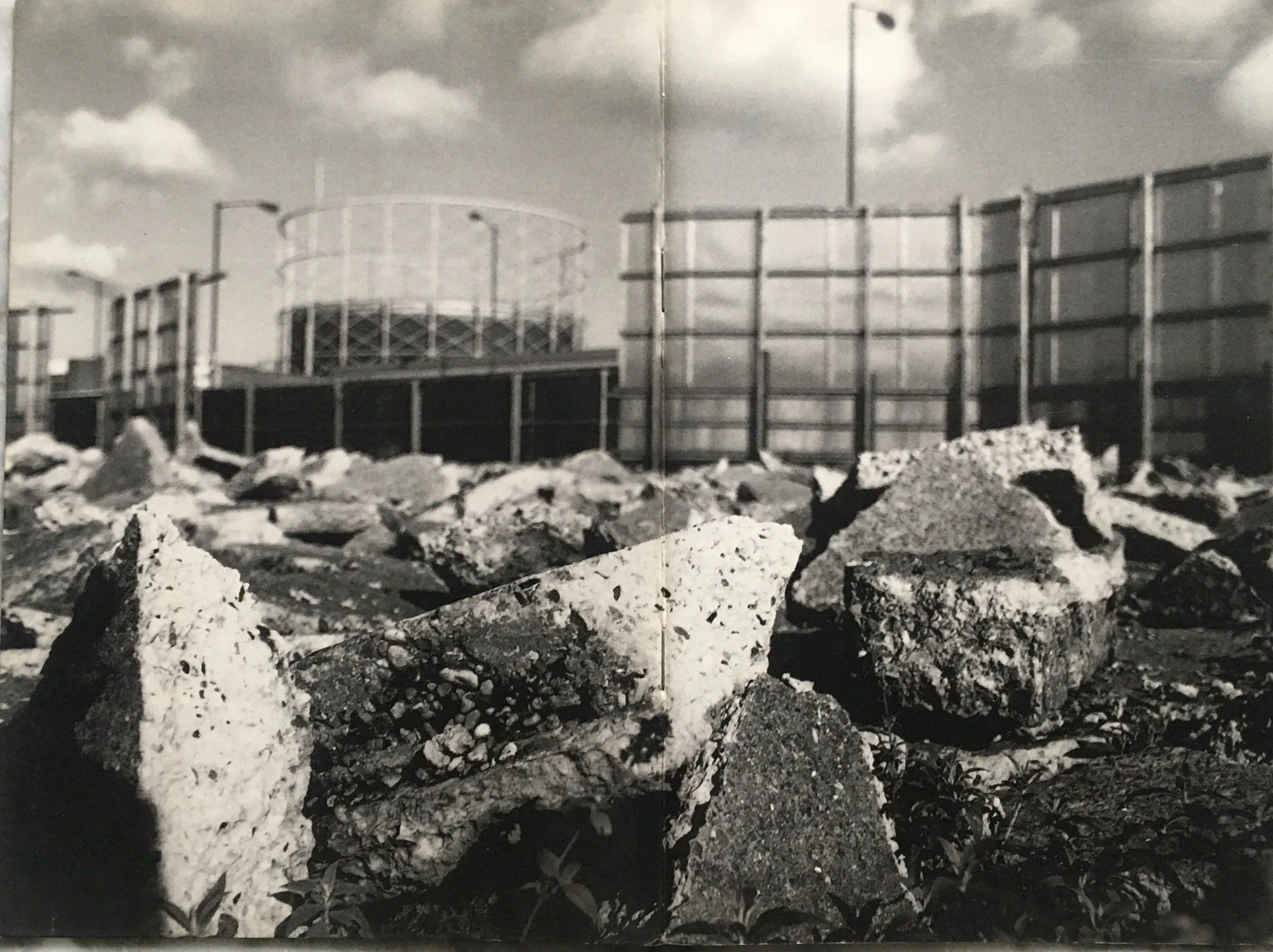
The space was also occupied by two large black and white photographs of broken up concrete in an urban cityscape, mounted onto aluminium on the walls beside a group of blue rubble bags filled with rock salt.
As visitors entered the space, an electronic counter registered their arrival and assigned each individual a numerical identity. This mechanised process immediately reduced the visitor to data, suggesting systems of surveillance, categorisation, and depersonalisation often present within institutional and public spaces. The viewer became part of the work itself, absorbed into a network of measurement and control.
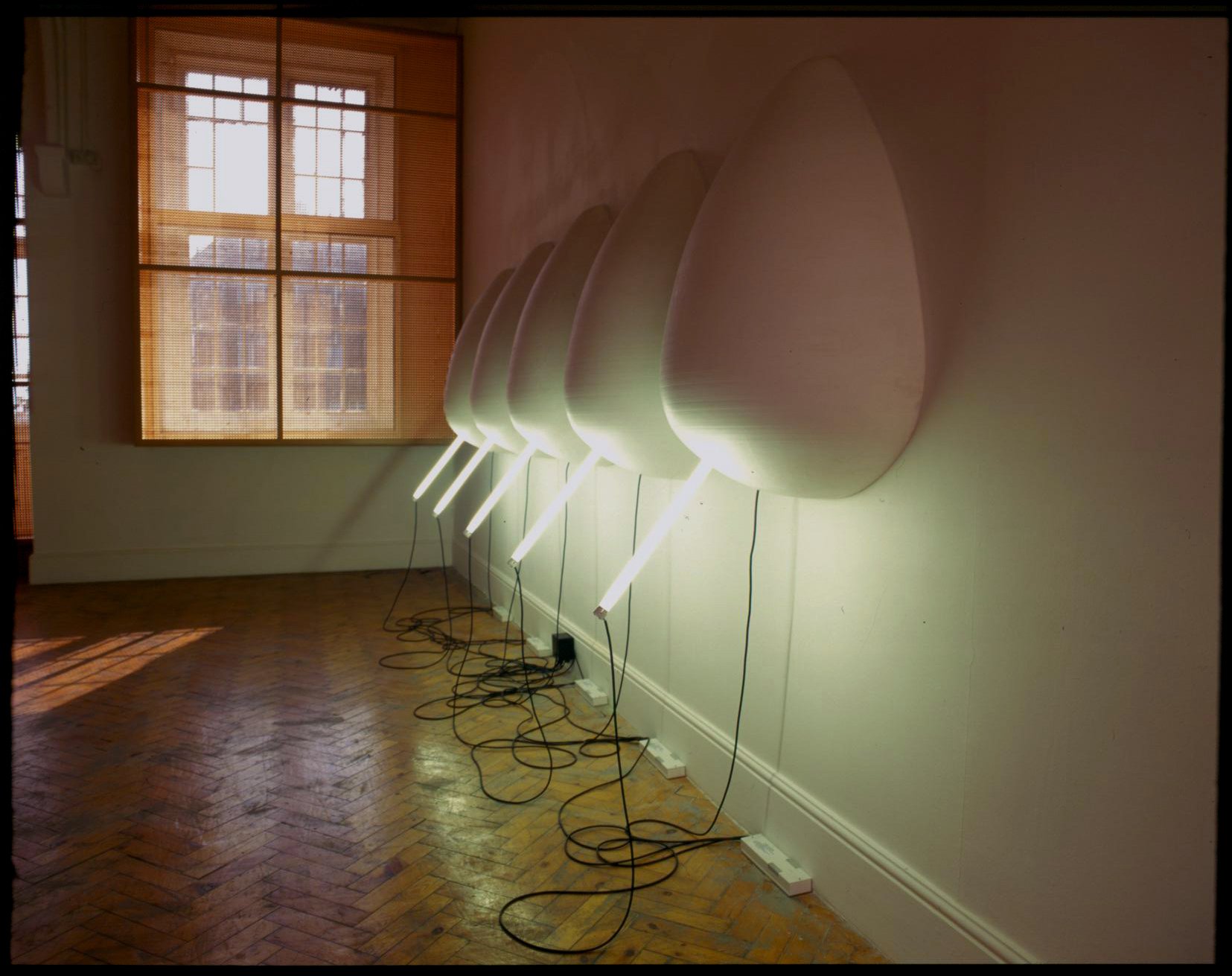
Along the entrance wall, a sequence of large hand-cast plaster hemispheres was installed at torso height. Their positioning established a direct bodily relationship with the viewer and evoked the forms and functions of public urinals. These ambiguous sculptural objects resembled swollen bellies or organic protrusions, simultaneously suggestive of vulnerability, consumption and sexuality. Embedded within each hemisphere were fluorescent light tubes with exposed trailing wires that appeared to penetrate or impregnate the forms. The glowing tubes introduced a cold industrial quality that contrasted with the tactile surface of the plaster. The sculptures erect light phallic forms extended into the gallery space, probing both the architecture and the viewer. Through this combination of bodily references, technological systems, and institutional aesthetics, the installation generated an unsettling atmosphere in which intimacy, control, and exposure became deeply intertwined.
Director of Camden Arts Centre and curated by Jenni Lomax
Catalogue Essay by Mark Leahy.
The Policing of Pleasure/ Camden Arts Centre, London UK 1995
This installation for the Camden Arts Centre transformed the gallery into a controlled and psychologically charged environment in which the relationship between the body, architecture, and technology became central. The large windows of the space were covered with a constructed layer of perforated pegboard that acted as a membrane between the interior and the outside world, filtering visibility and carefully regulating the levels of natural light entering the gallery. This semi-transparent barrier created a sense of separation and containment, making the interior feel simultaneously exposed and isolated. Twelve speakers were mounted to the ceiling and constantly played live recorded sounds from the motorway outside via a directional microphone. These sounds played sequentially from one speaker to another, jumping around the gallery space one at a time.