Orbit of Reaction, 2026
London Studio
An outline for proposal/Working
Title: Orbit of Reaction
This new body of research, currently in development in the studio, presents a series of responsive, illuminated sculptures that translate human movement into patterns of motion and light, forming a living system shaped by collective presence. The work builds on an ongoing exploration of entanglement, coincidence, and the subtle, often unseen relationships that emerge when individuals occupy a shared space. It seeks to reveal how proximity and interaction—however fleeting or unconscious—generate complex networks of connection. The installation will operate as a bridge between the intangible patterns of human physical behaviour and their material manifestation through light, movement, and spatial form.
Conceived as a celestial installation for VISUAL, the work draws on the activity of its audience through a network of embedded sensors, using proximity itself as a primary material. Individual human gestures—often unintentional—are detected and recorded as part of this process, to develop a translation language incorporating bursts of light or kinetic motion. These gestures are not isolated but woven together into a continuous, evolving choreography. The resulting luminous rhythms demonstrate how disparate actions accumulate into a shared, organic system, highlighting the interdependence of individual presence within a collective environment.
Through this process of translation, movement becomes a visual echo of time, transition, and co-existence. The studio space operates as a live, performative site, where the work continuously evolves through ongoing collective encounters.
It functions as both an aesthetic and metaphysical machine, interpreting human activity as a form of data that exists beyond language, hierarchy, or fixed representation. In doing so, the research proposes an alternative framework for understanding connection—one that privileges emergence, sensation, and relational dynamics over narrative structure. It shifts the focus from what happens (causality and resolution) to how it feels (immediacy and affective impact) and how it unfolds (unpredictable, real-time interactions).
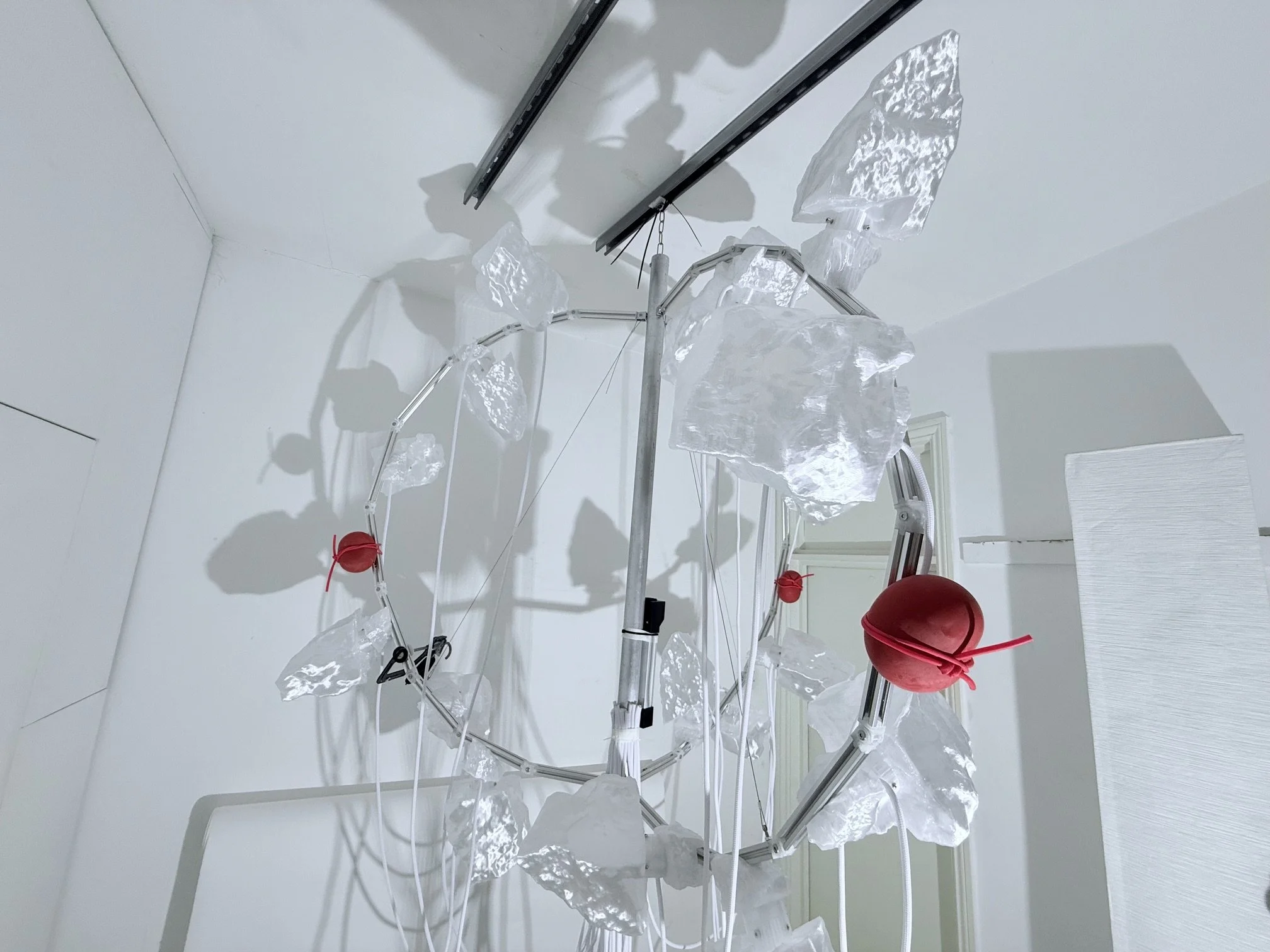
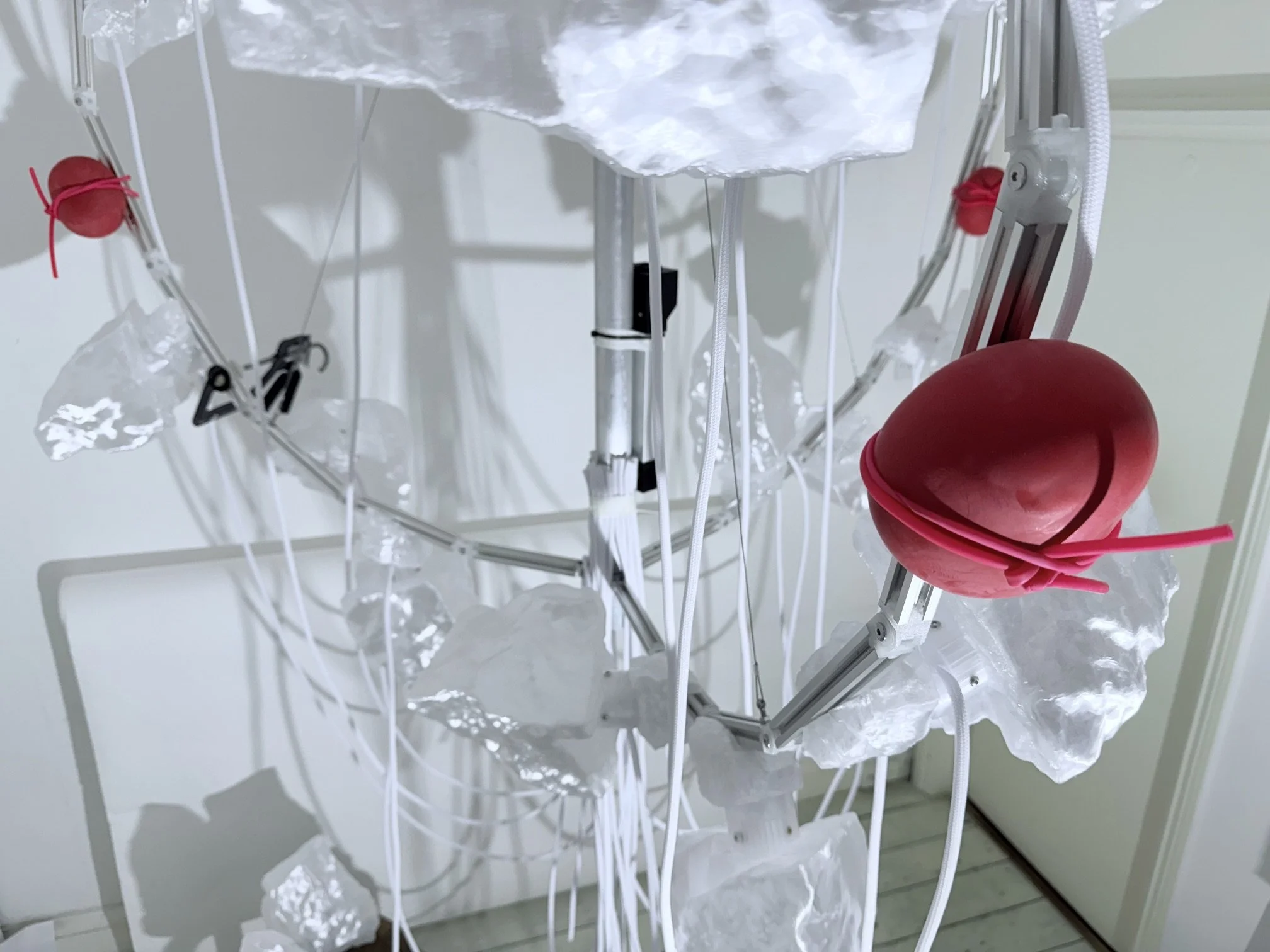
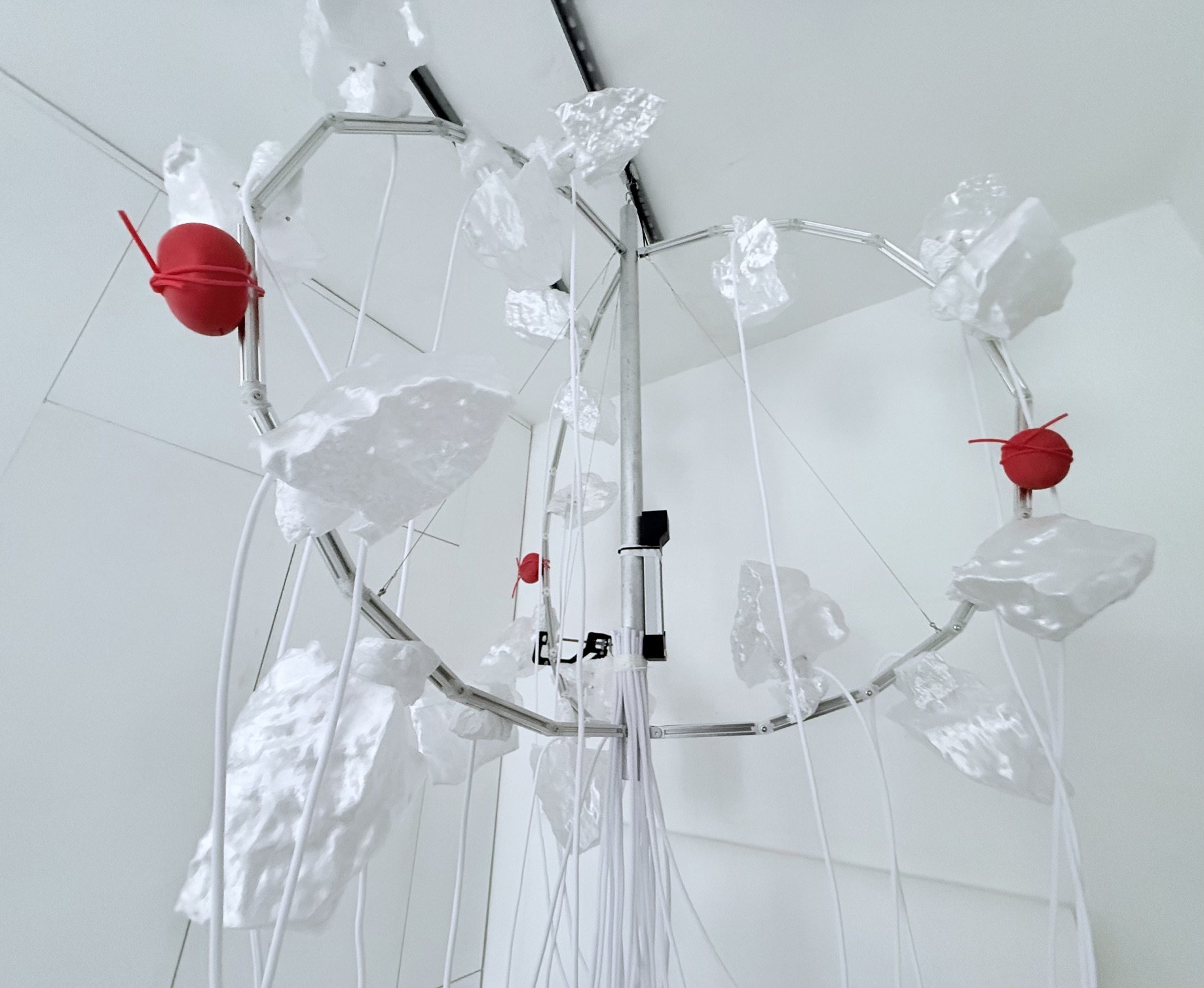
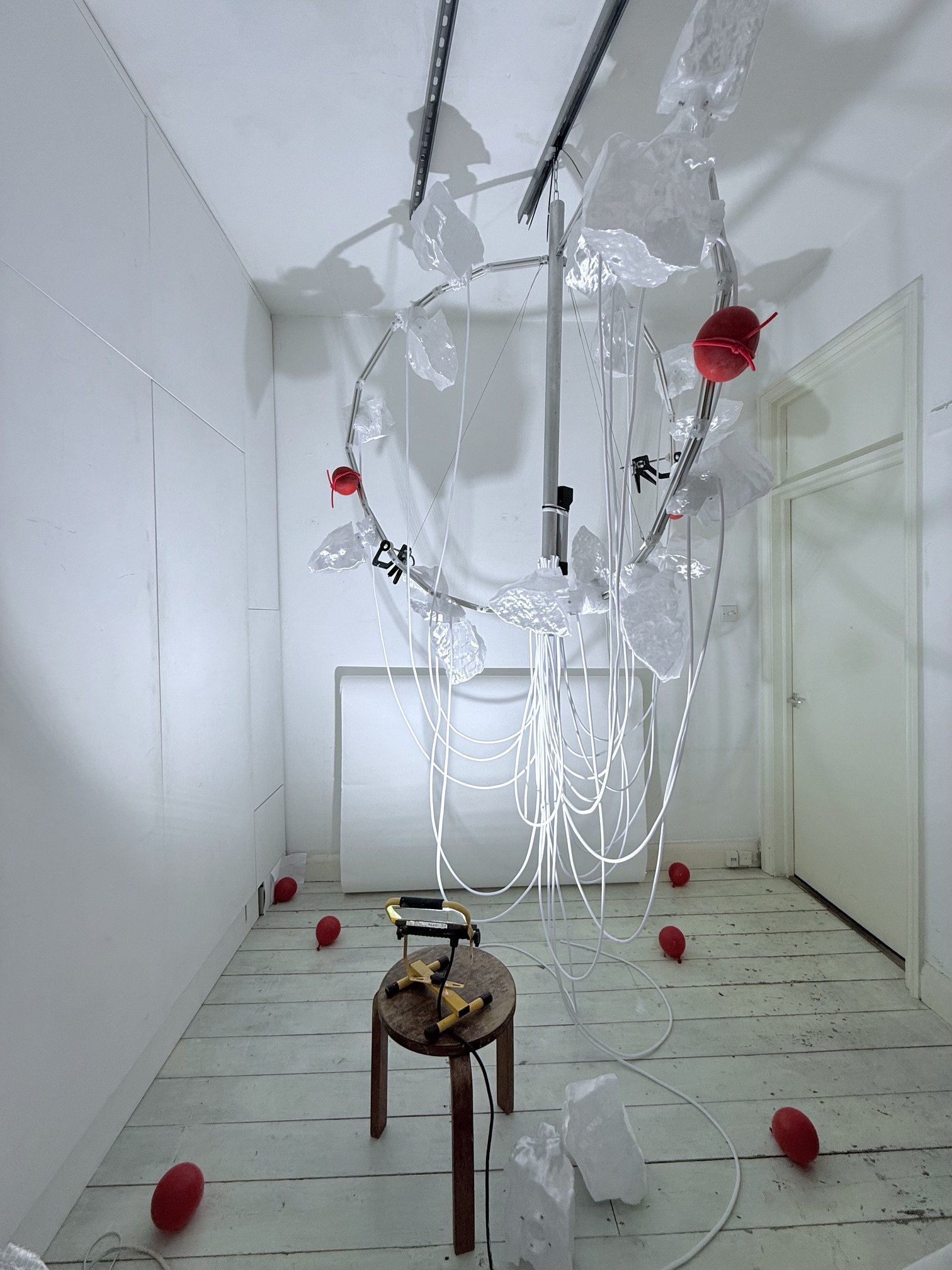
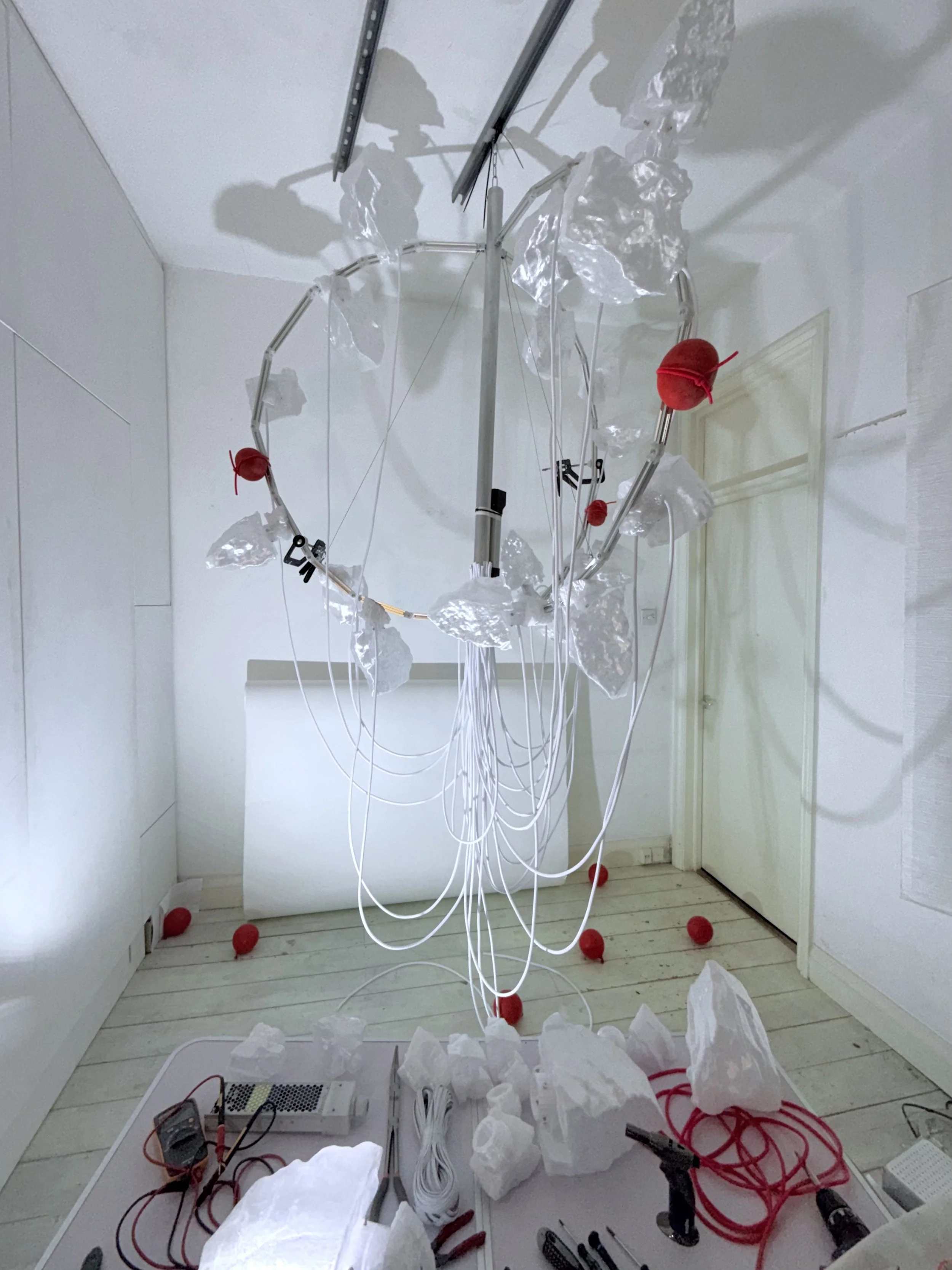
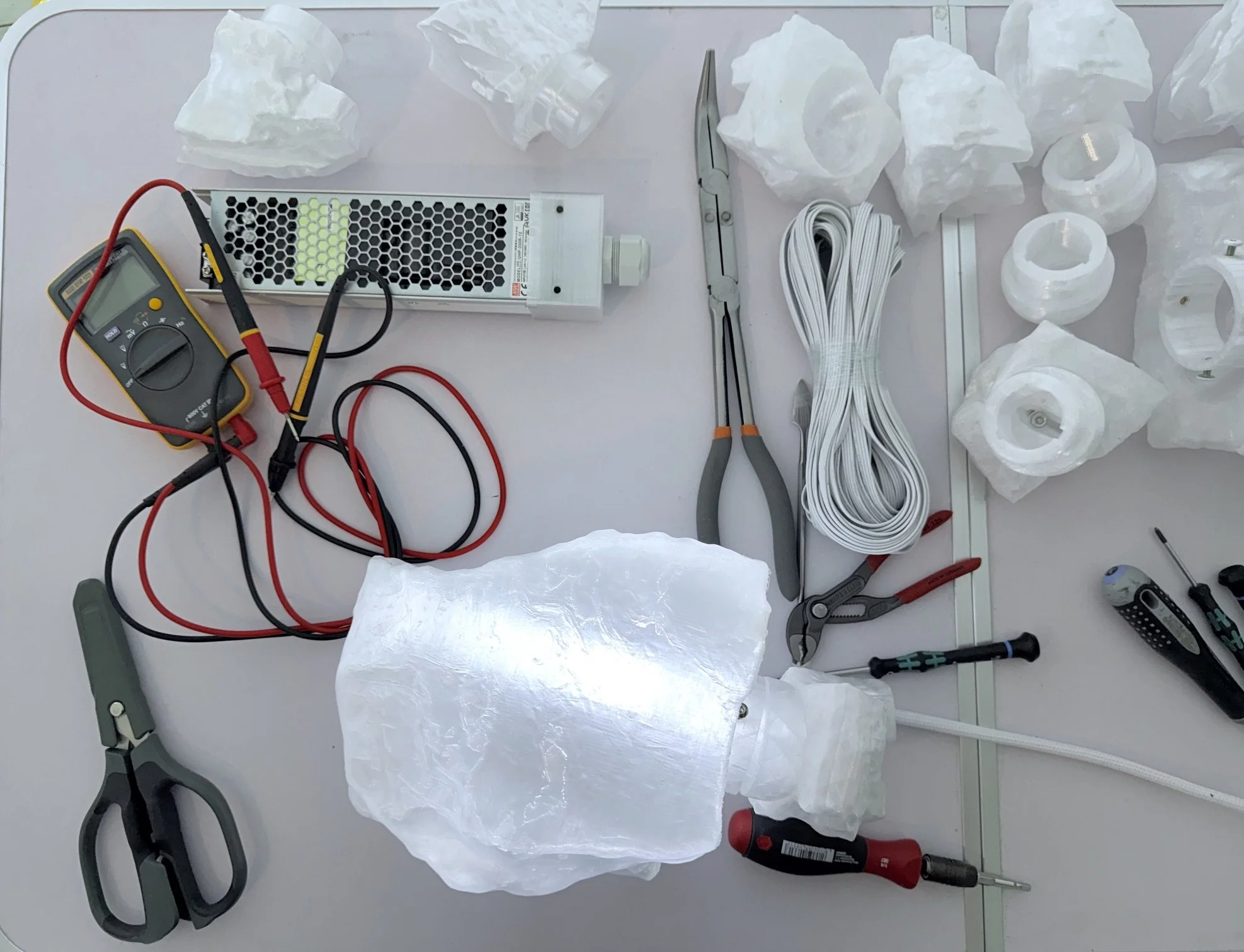
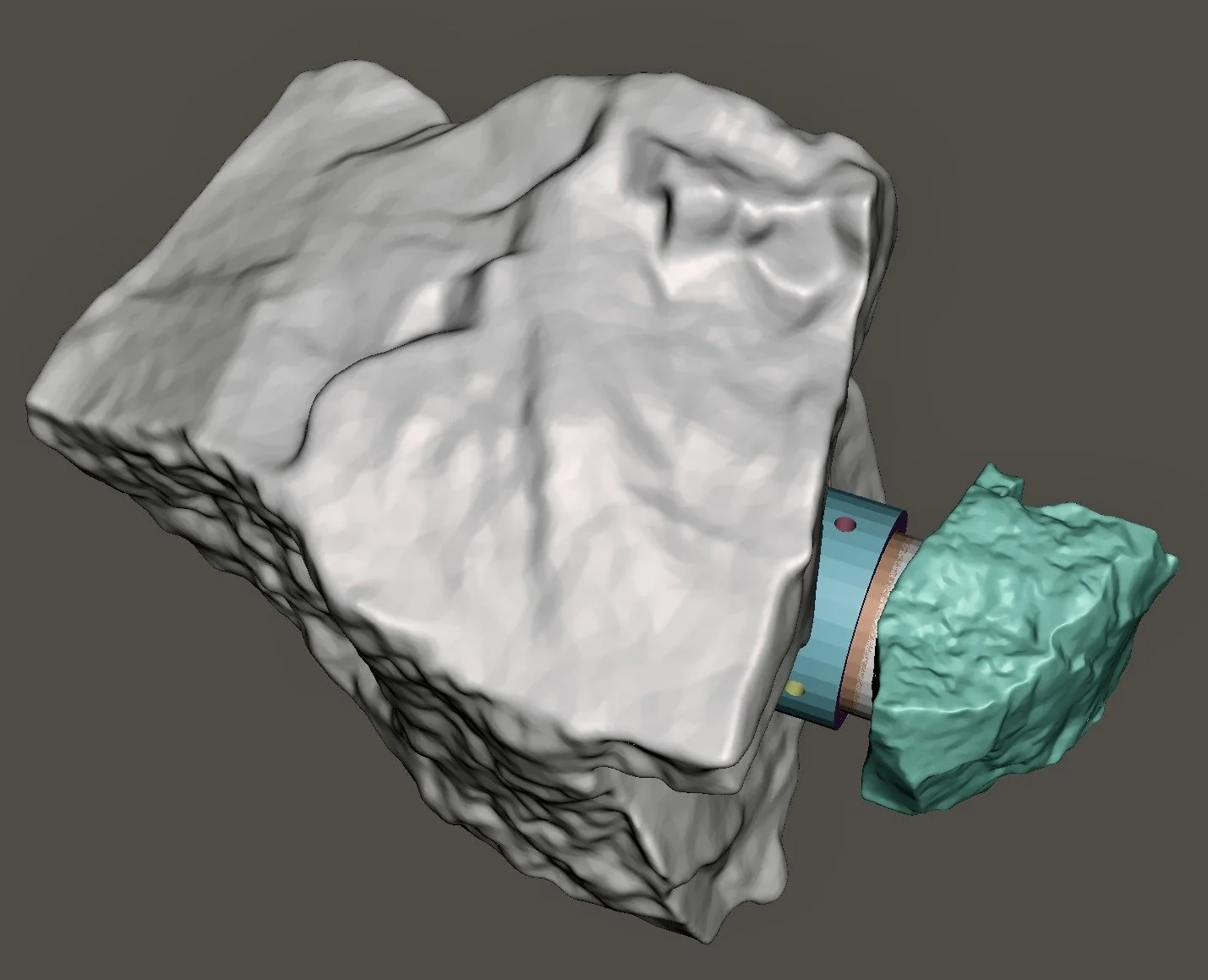
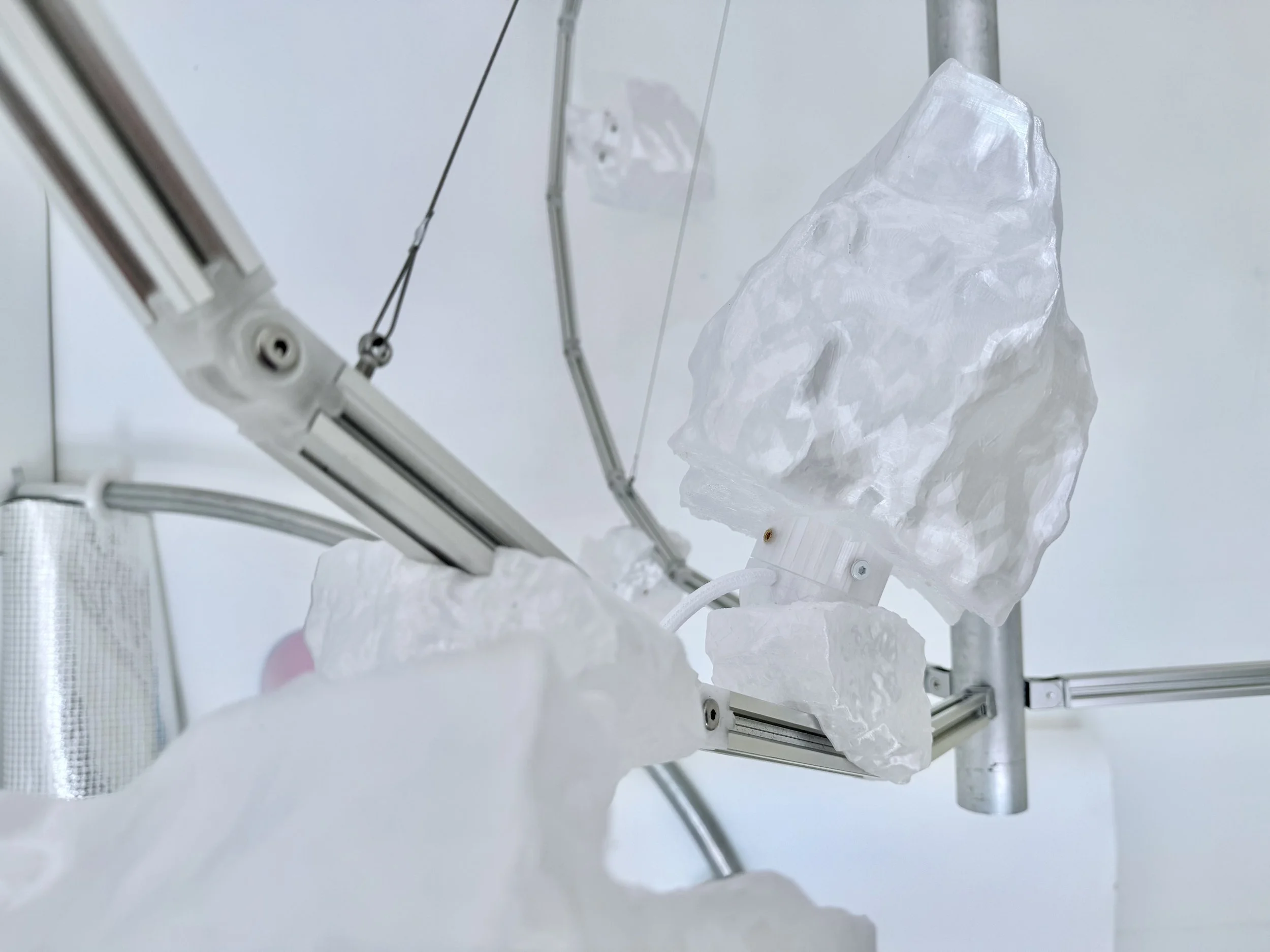
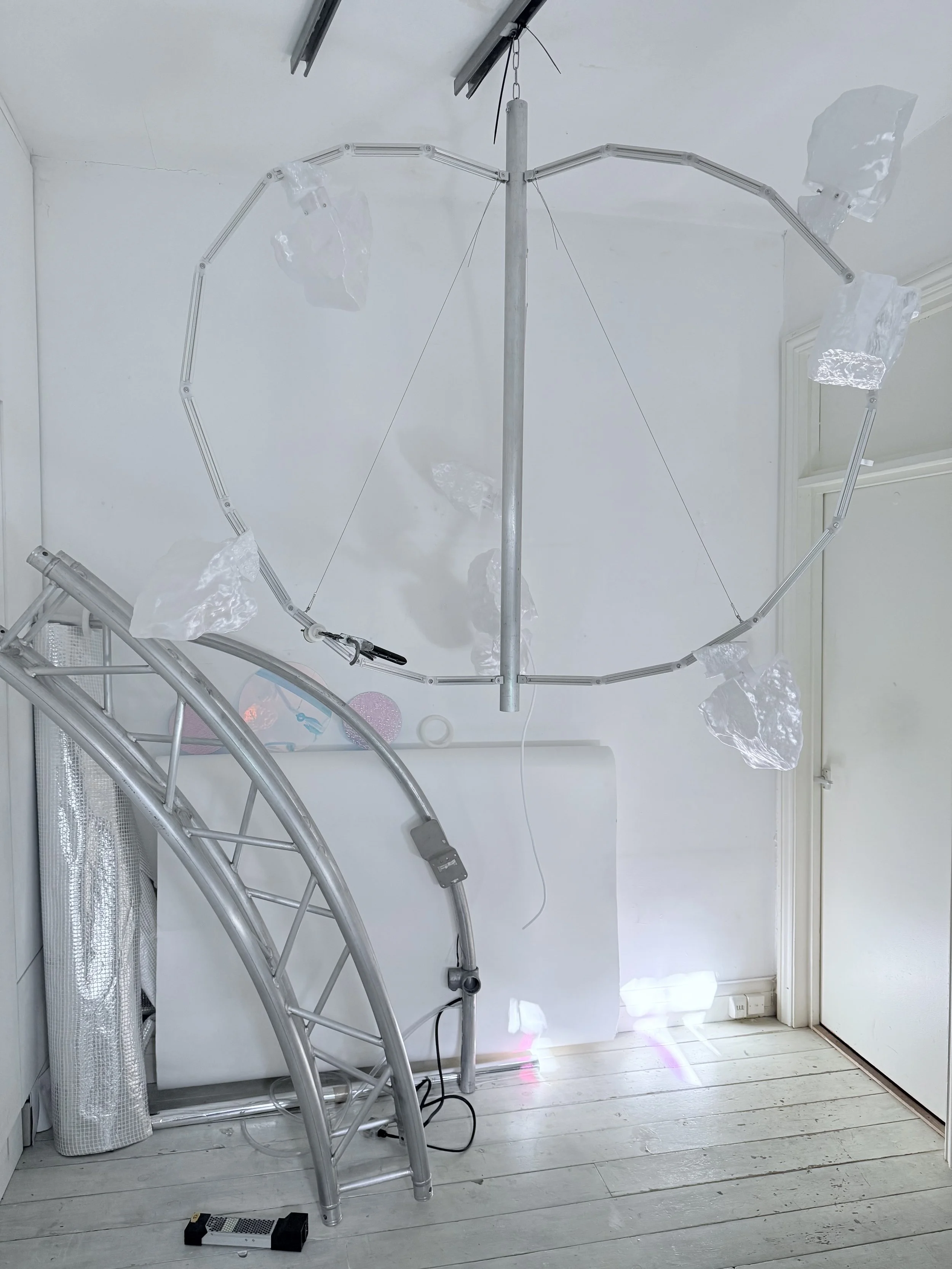
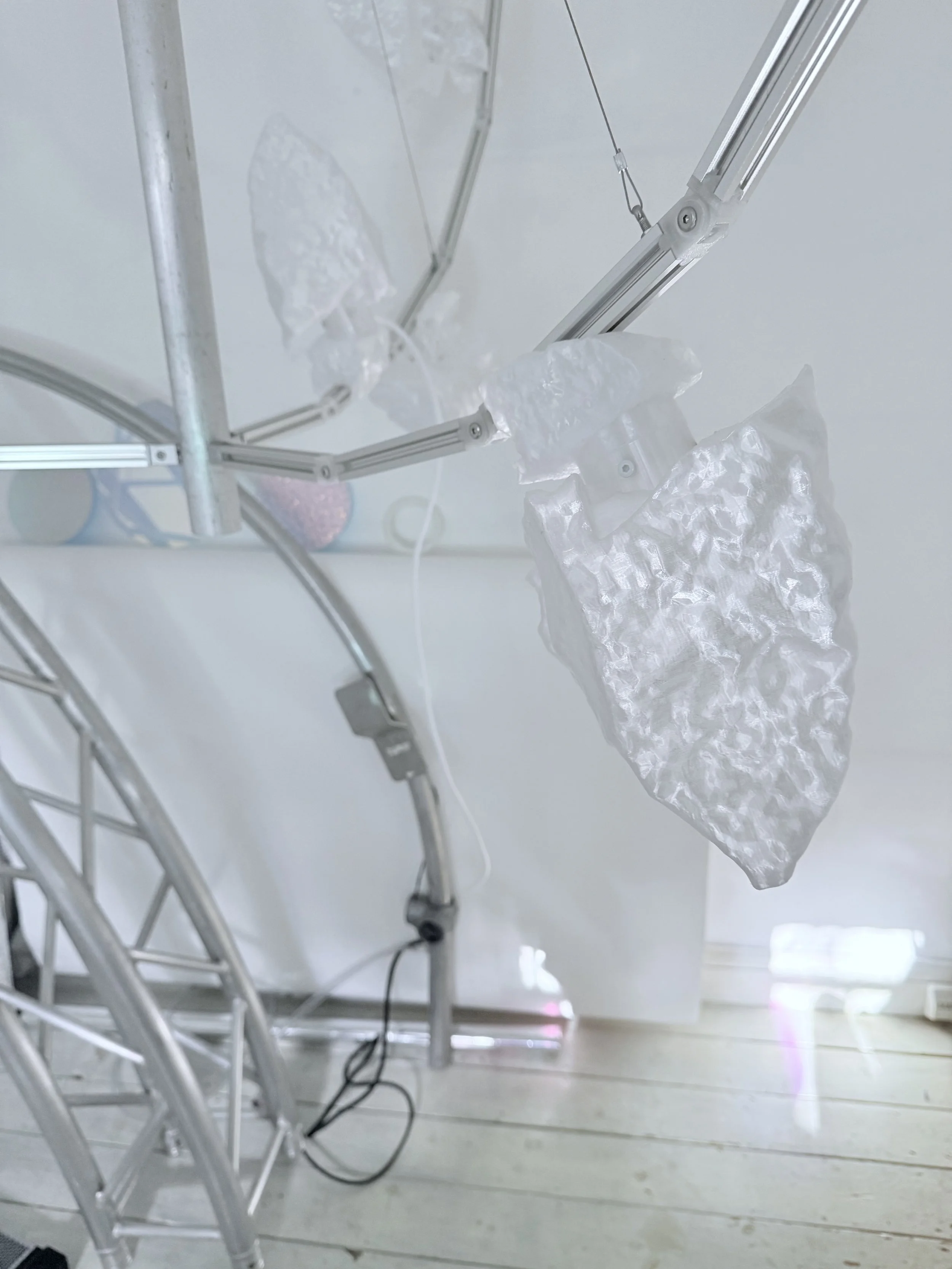
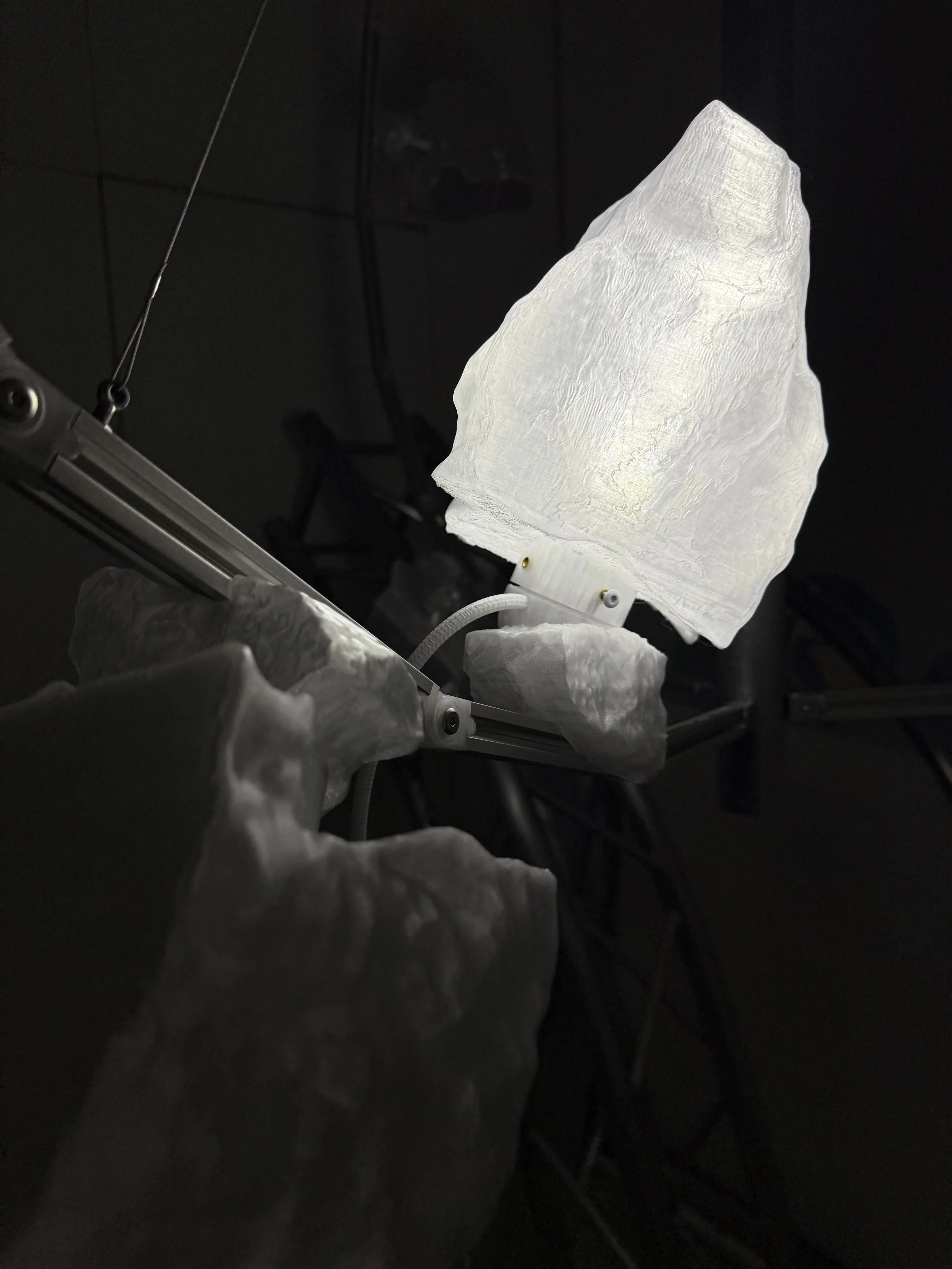
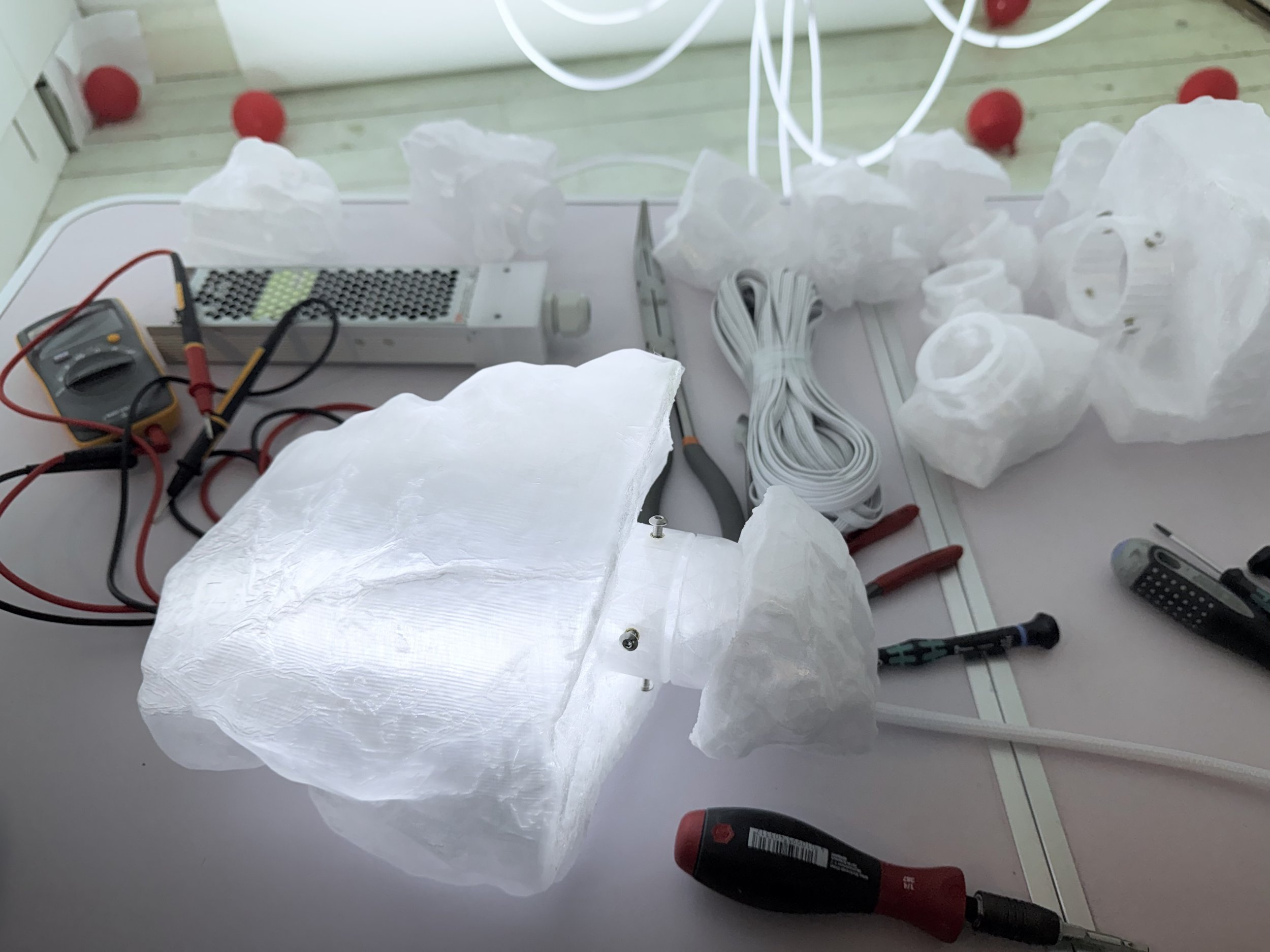
The sculptural system acts as an organ of reaction, composed of multiple white, 3D-printed, translucent, rock-scanned forms, each of which will internally be illuminated and embedded with LED lighting. Other elements in development include a cast, then scanned, 3D-printed, red-coloured interlocking semi-circular bubble forms housing 60GHz sensors, which will sense people’s movement and heartbeat in the sculpture's surrounding area and use this information to feed custom-built software that orchestrates the lighting. At a micro level, interactions between these components will give rise to complex, unified behaviours across the work, reinforcing the concept of a distributed yet interconnected system.
Structurally, at this phase, the scale of the final work will be dependent on its environment, such as the main gallery or link gallery at Visual, Carlow. At the moment, this smaller model, seen above, is supported by a semi-circular aluminium framework that allows rotation about a central axis. Mounted within this structure, the organic forms and reflective elements appear delicately balanced, emitting intermittent, elongated bursts of light that will extend into the surrounding space. This interplay actively incorporates the viewer into the work, dissolving the boundary between observer and observed. In doing so, it reveals how human actions—however fragmented, abstract, or incidental—are intrinsically linked. The work in development will be a poetic meditation on shared authorship, perception, and the interconnected nature of collective human experience.
Work produced with support from electronic engineer/software designer Erik Kearney.